Vapes and Carts
Why the 2ml Disposable Vape Pen Is Reshaping USA Vape Packaging in 2026
Nov
Last updated: 15 November 2026 · For businesses and adults of legal age only (21+ in most U.S. states)
The 2ml all-in-one (AIO) disposable has become one of the most common vape formats, and it changes what the packaging has to do. The device is a single sealed unit, so the box, the child-resistant layer, the label and the anti-counterfeit features all carry more of the load. This guide explains what a 2ml disposable is, how the format affects packaging in the USA in 2026, which rules to check, and how brands and packagers can protect against counterfeits.
Quick answer: A 2ml disposable is a self-contained device with a tank that holds about two millilitres of oil. For packaging, that means one sealed unit per box, child-resistant and tamper-evident protection that meets your state’s rules, a label that matches the contents, and features that help buyers verify the product. Packaging rules differ by state, and the federal hemp rules change again on 11 December 2026, so confirm both before you order.
Before you start: check the law first
Cannabis and THC vape laws differ by country, state and city, and they are changing. This guide is general information, not legal advice.
- Licensed markets. Products sold through state-licensed cannabis retailers follow that state’s packaging, labeling and testing rules.
- Hemp-derived products. These follow separate rules that are changing on dates set in November and December 2026. See the section on federal hemp dates below.
- Shipping. THC products cannot be shipped across state lines under federal law, and a seller who offers to do so is a warning sign.
- Outside the U.S. THC products may be illegal altogether.
What is a 2ml disposable vape pen?
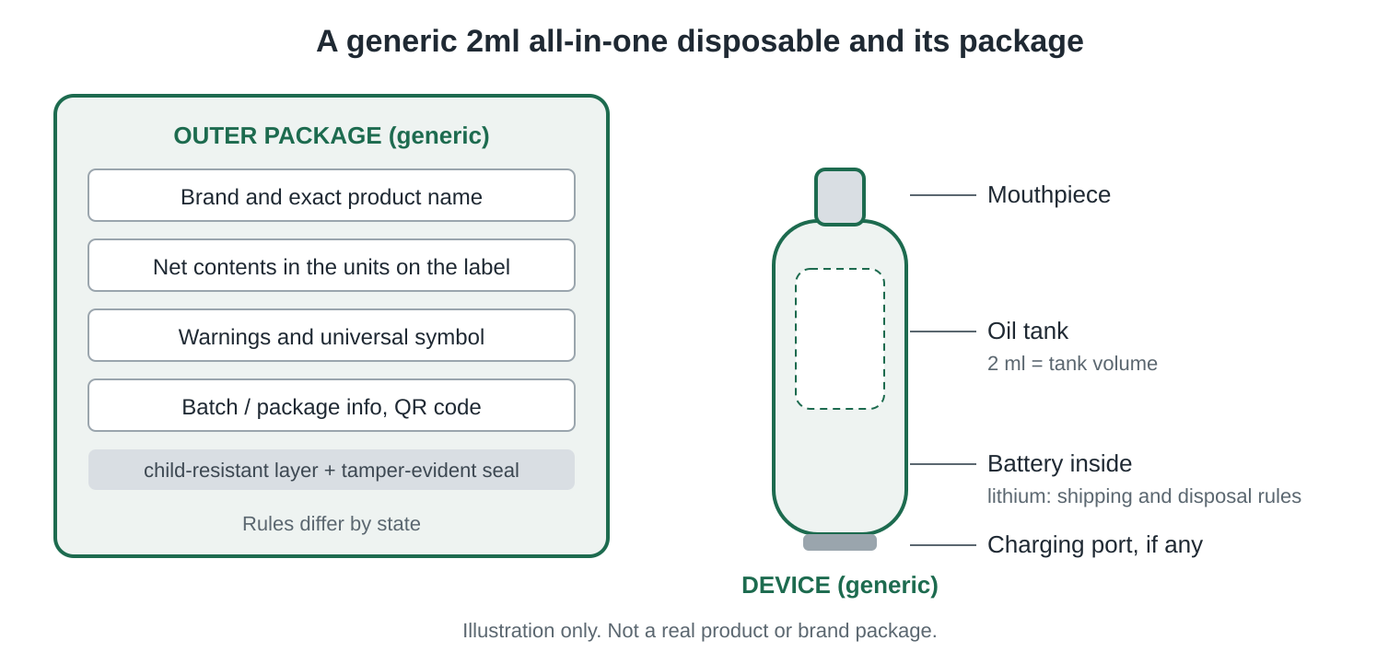
An all-in-one disposable combines the oil tank, heating element, battery and mouthpiece in one device. There is no separate battery to buy, and the device is not designed to be refilled. Some are rechargeable and some are not, so check the specifications for your exact model.
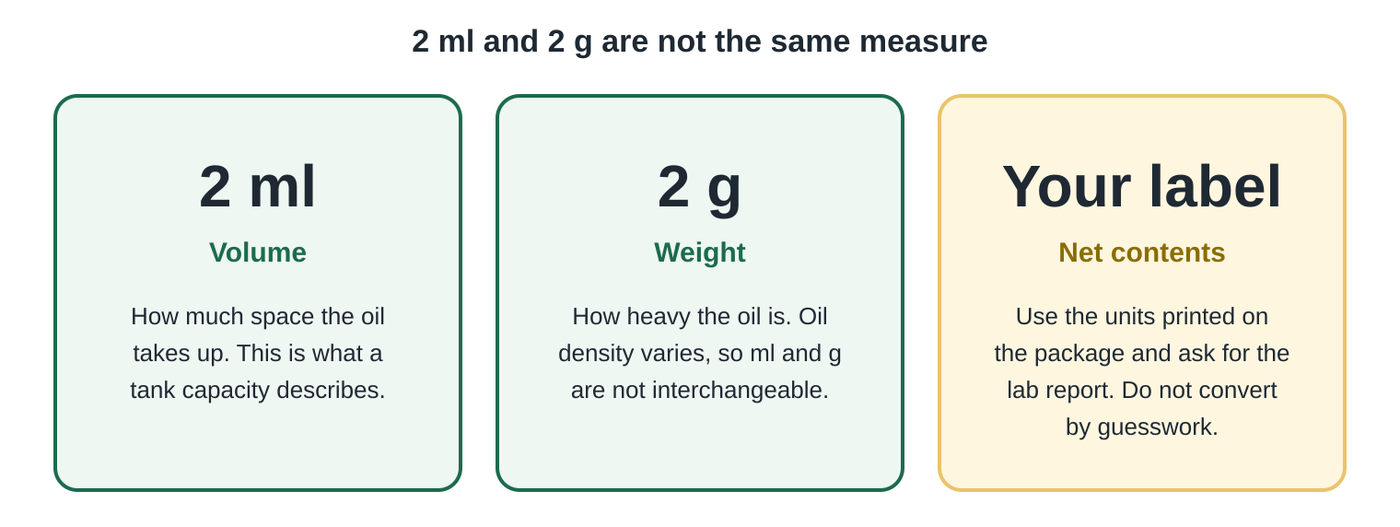
The “2ml” describes the tank’s capacity by volume. It is not a weight, and it does not tell you how strong the product is. Many products are labeled in grams instead, and because oil density varies, 2 ml and 2 g are not interchangeable. Go by the net contents printed on the label and the lab report. Our 2G vs 3G disposables comparison covers how size relates to price per gram.
How the 2ml format changes packaging
Because the device is one sealed unit, packaging decisions look different from those for a separate cartridge and battery.
- One unit per package. Each device needs its own compliant package, with the child-resistant layer, label and seal built in.
- A battery inside the product. Lithium batteries carry shipping, storage and disposal rules, so plan for how cases are transported and what disposal guidance you print, following your state’s requirements.
- A larger, heavier device. Box and master-case dimensions change. The insert should hold the device still so the mouthpiece and charging port are protected and nothing rattles or leaks in transit.
- Windows and cutouts. Buyers like to see the device, but a window must not weaken the child-resistant layer or the seal.
- The seal does more work. Buyers cannot inspect the oil, so an intact tamper-evident seal and clear batch information carry the trust.
Packaging rules to check
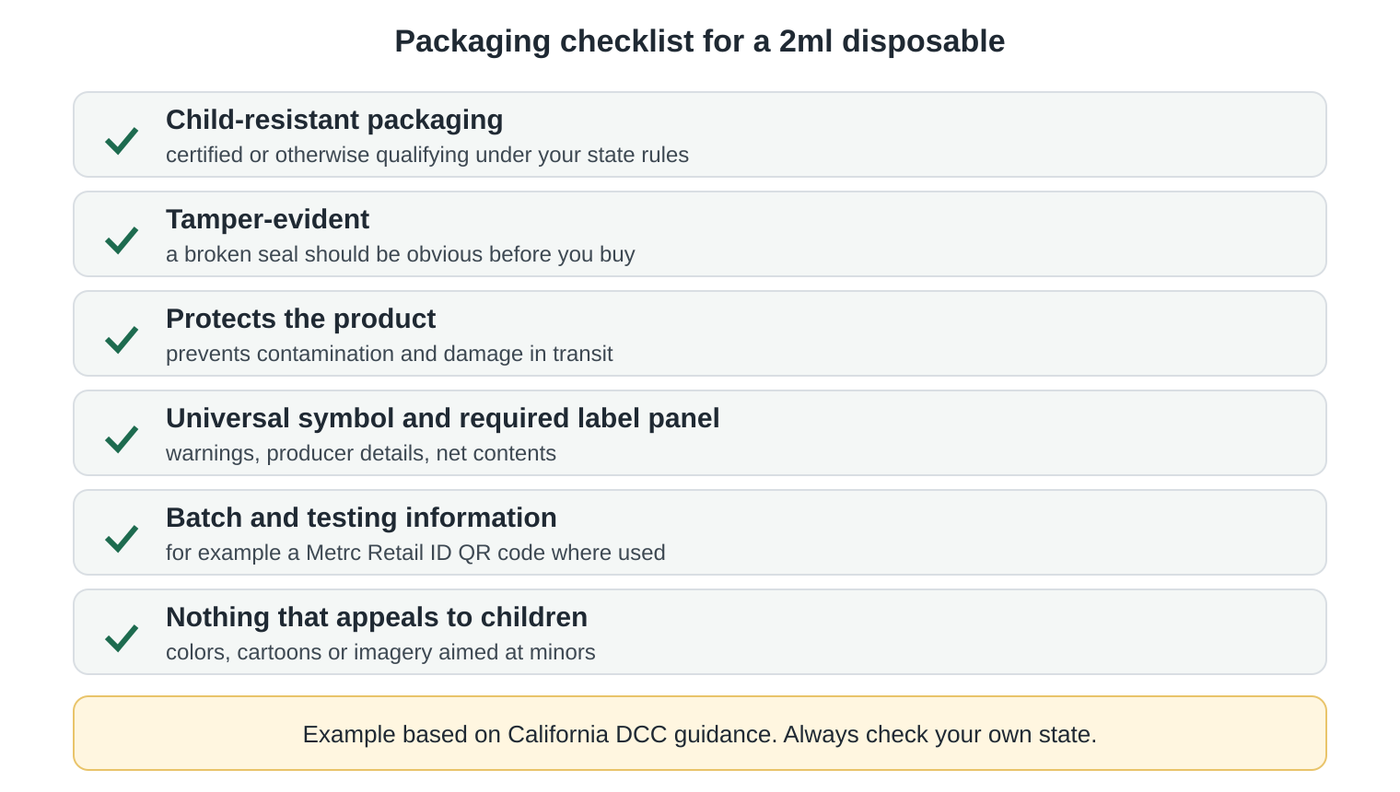
Rules are set state by state. California is a useful reference because its Department of Cannabis Control (DCC) publishes clear guidance. According to the DCC:
- Child-resistant packaging. State law requires all cannabis goods to be sold in child-resistant packaging, designed to be hard for children under five to open. The licensee that packaged the product is responsible for meeting this.
- Qualifying types. The DCC’s child-resistant packaging page lists packaging certified under the Poison Prevention Packaging Act (16 CFR 1700.15(b)(1)) among the qualifying types.
- Single-use or multiple-use. The same page lists vape cartridges under single-use child-resistant packaging, which must say “This package is not child-resistant after opening.” It does not name disposables, so confirm with the regulator how your product is classified.
- Tamper-evident and resealable. These are listed among the packaging requirements on the DCC’s packaging page, along with protection against contamination.
- Universal symbol and labeling. The DCC requires the universal symbol on the label. See its labeling checklist for manufactured products.
- Not attractive to children. Cannabis products that are attractive to children are prohibited, and licensees can face citations, fines or license action. See the DCC’s requirements for cannabis goods.
Other states have their own rules. Ohio’s Division of Cannabis Control, for example, publishes packaging and labeling guidance dated August 2026. Read the rules for the state where the product will be sold.
The 2026 federal hemp dates and your packaging
If you work with hemp-derived products rather than licensed-market cannabis, federal dates matter. Per Hemp Law Group’s update of 9 November 2026:
- 12 November 2026. Products built on cannabinoids the cannabis plant cannot naturally produce lose federal hemp status.
- 11 December 2026. Most of the new hemp definition takes effect, including a total THC standard and a cap of 0.4 mg of total THC per container. Congress delayed this date from 12 November by 30 days.
For packaging, the per-container cap raises a practical question: what counts as a “container”? The same source reports that the FDA has not yet published the guidance that was due in February 2026. The Congressional Research Service explains the two-stage dates. Bills to delay, repeal or replace the change are pending, so the position can change. Check current law, or ask a lawyer who knows hemp and cannabis law, before you order a case or print packaging.
Labels and authenticity features
Packaging is also a buyer’s main way to check that a product is genuine. Features worth building in:
- A scannable code. In some regulated markets, a Metrc Retail ID QR code can show product information and, where available, lab results and recall notices. It is not on every package or in every market, and a QR code alone does not prove authenticity.
- A batch number that matches the lab report.
- An intact tamper-evident seal and clean, accurate printing.
- Plain information. Product name, net contents in the label’s units, warnings and producer details.
Our guide to checking whether a Jeeter vape is real shows how buyers use these signals in practice.
Counterfeits and brand names
Packaging is the first thing counterfeiters copy. MJBizDaily has reported that counterfeit vape cartridges are a hurdle for licensed California makers, and untested fakes are a real health risk. The CDC recommended not using THC vapes, particularly from informal sources, after the 2019 EVALI outbreak, which it strongly linked to vitamin E acetate. That does not mean all THC vape products contain it.
For anyone designing or buying packaging, one rule matters most: only a brand’s owner, or a company it has licensed, may use that brand’s name, logos and artwork. Empty devices, boxes or stickers that carry another company’s brand, supplied for someone else to fill, are counterfeit goods and create trademark liability for everyone in the chain. Build your own brand, or get written permission.
Checklist before you order
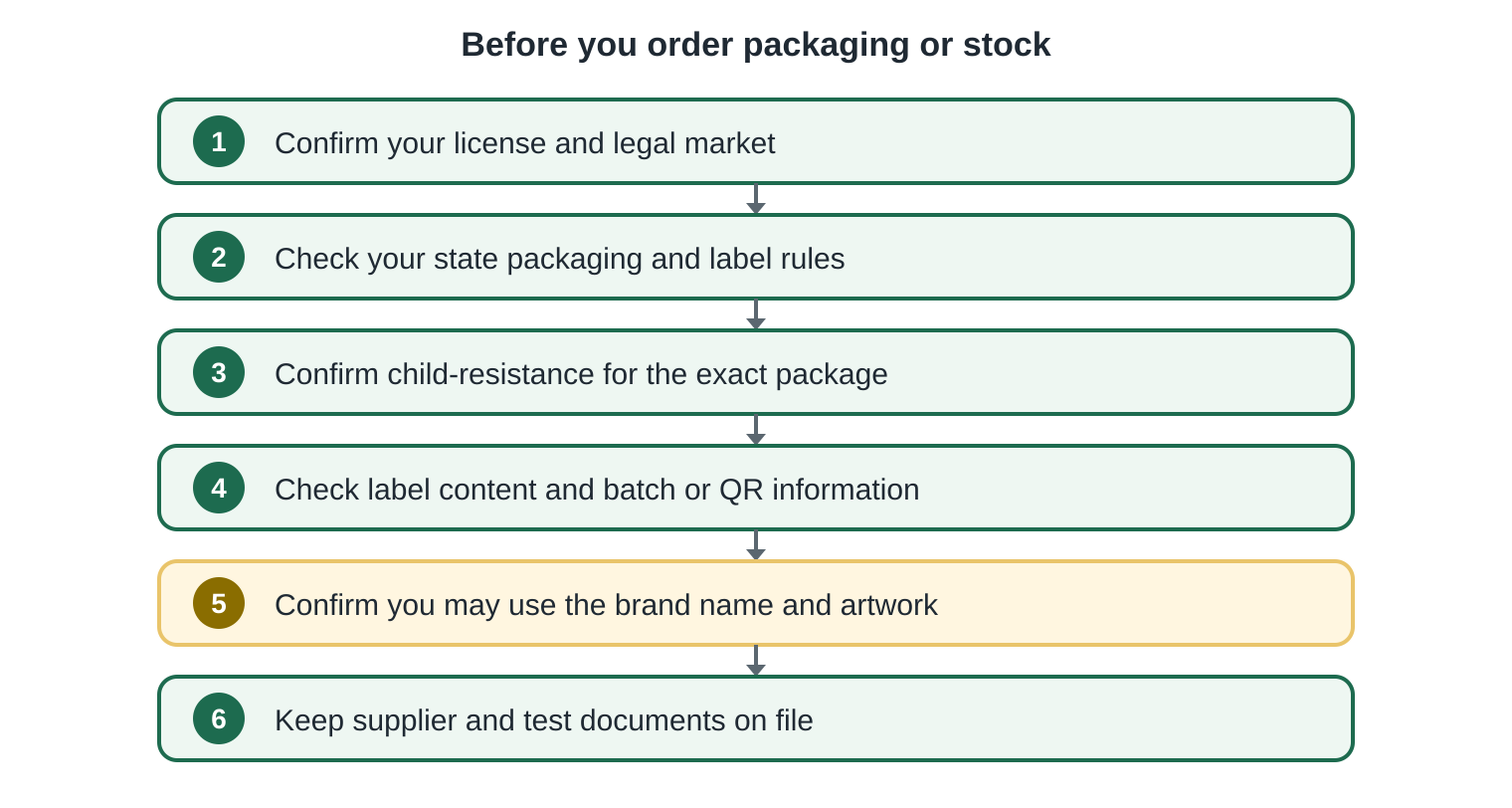
| Question | What to confirm |
|---|---|
| Am I licensed for this market? | Your state license, or the federal hemp status of the product, for the date it will be sold. |
| Is the package child-resistant? | Certification for the exact package and closure you are buying, not a similar sample. |
| Is it tamper-evident? | A seal that shows if the package was opened. |
| Does the label match the contents? | Net contents in the label’s units, plus warnings, symbol and batch details. |
| May I use this brand name and artwork? | Your own brand, or written permission from the owner. |
| Can I prove where it came from? | Supplier documents and an independent lab report for the batch. |
If you or someone you know is struggling with cannabis use in the United States, SAMHSA’s National Helpline is free, confidential and open 24/7 at 1-800-662-HELP (4357). It is a U.S. service. Outside the U.S., contact your local health service.
2ml disposable vape packaging FAQ
What does 2ml mean on a disposable vape?
It describes the volume of oil the tank can hold. It does not describe weight or strength. Go by the net contents on the label and the lab report.
Is a 2ml disposable the same as a 2 gram disposable?
Not necessarily. Milliliters measure volume and grams measure weight, and oil density varies. Compare products using the units printed on each label.
Do disposable vapes need child-resistant packaging?
In California, state law requires all cannabis goods to be sold in child-resistant packaging. The DCC’s page lists vape cartridges under single-use child-resistant packaging and does not name disposables, so confirm how your product is classified. Other states have their own rules.
Does the packaging need to be tamper-evident?
California lists tamper-evident and resealable packaging among its requirements. Check your own state’s rules and use a seal that shows if the package has been opened.
How do the 2026 federal hemp changes affect packaging?
For hemp-derived products, the per-container THC cap that takes effect on 11 December 2026 makes the definition of a container important, and the FDA guidance on it had not been published at the time of the source cited above. Check current law before you print or order.
How can brands make packaging harder to counterfeit?
Use tamper-evident seals, serialized batch information, and a scannable code such as a Metrc Retail ID where your market supports it, and keep supplier and lab documents on file. No single feature stops copying, so combine several.
Can I put a well-known brand’s name on my own packaging?
No, not without the owner’s written permission. Using another company’s name or artwork on devices or packaging is trademark infringement and may be counterfeiting.
Where should buyers purchase vape products?
From licensed retailers in markets where cannabis is legal for them. Unverified online sellers and marketplaces are the usual source of fakes.
Sources
- California DCC: Packaging
- California DCC: Child-resistant packaging (CRP)
- California DCC: Labeling requirements for manufactured cannabis products
- California DCC: Requirements for cannabis goods
- Ohio Division of Cannabis Control: Packaging and labeling guidance (August 2026)
- Hemp Law Group: Federal hemp ban 2026, where things stand (updated 9 November 2026)
- Congressional Research Service IF13136: Changes to the statutory definition of hemp
- Metrc Retail ID
- Cannabis Business Times: Metrc Retail ID recall feature in California
- MJBizDaily: California cannabis vape cartridge makers facing counterfeit products hurdle
- CDC MMWR: Characteristics of a nationwide EVALI outbreak, August 2019 to January 2020
- SAMHSA National Helpline (U.S. only)
Legal information checked 15 November 2026. Laws change quickly, so verify before you order or sell. This guide is general information, not legal advice.
